





Why Logistics May Be The Quiet Force Reshaping Oragadam
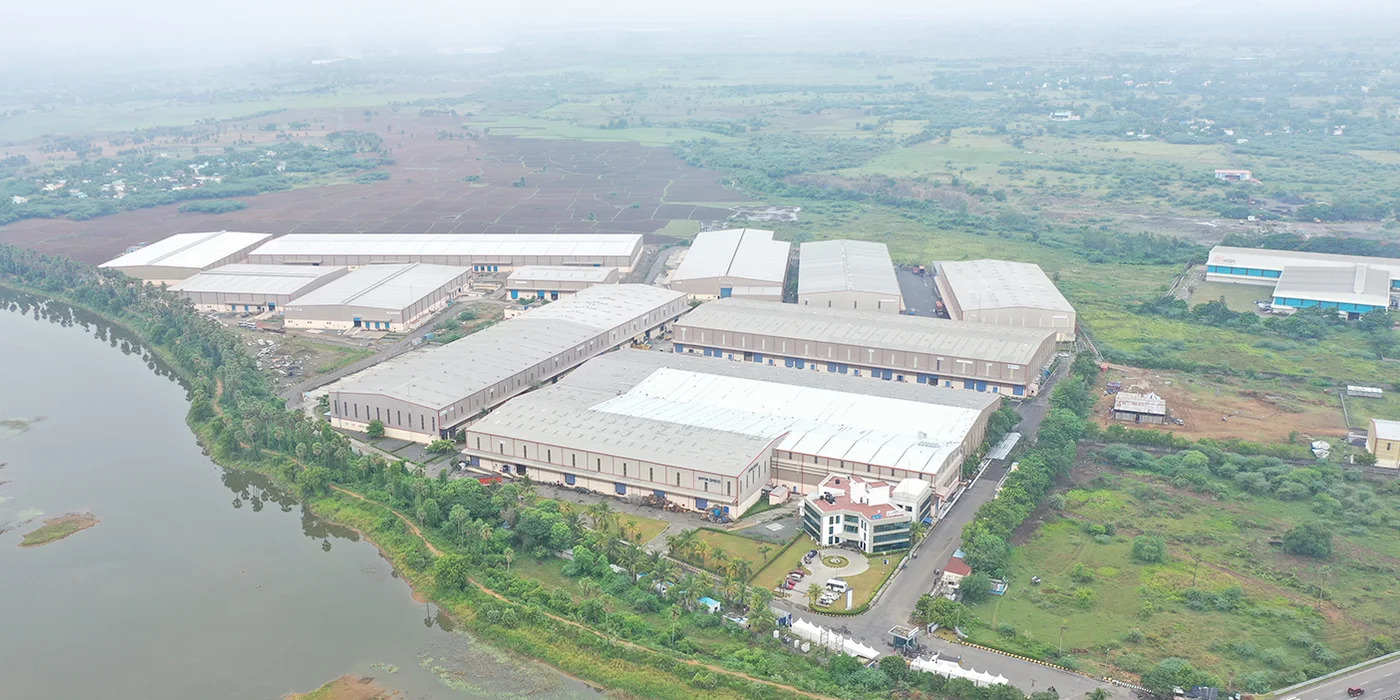
Factories attract attention.
Warehouses rarely do.
Yet some of the strongest evidence about the future of Oragadam can be found not in automobile plants, but in industrial and logistics real estate.
Why?
Because logistics developers generally expand where occupier demand is already visible.
ESR's Oragadam Industrial & Logistics Park provides one example.
After acquiring additional land in 2024, ESR described robust demand for Grade-A industrial buildings in the Oragadam–Sriperumbudur cluster. Its current project information lists an expanded park of approximately 135 acres, with around 2.8 million sq. ft. of potential space across 17 buildings, serving sectors that include automotive, electronics, energy, aerospace, defence, R&D and third-party logistics.
Another developer, OneAlpha Ventures, entered the corridor with a 1.2 million sq. ft. industrial and logistics development at Devariyambakkam in the Oragadam region, aimed at built-to-suit and ready industrial requirements.
This is significant.
Modern manufacturing increasingly depends on sophisticated supply chains.
Factories no longer operate as isolated islands.
They depend on just-in-time components, third-party logistics providers, specialised storage, assembly partners, packaging businesses and suppliers located within practical delivery distances.
A strong logistics ecosystem therefore makes an industrial corridor more efficient.
And efficiency attracts further industry.
This creates a reinforcing loop:
Manufacturers create logistics demand.
Logistics investment makes the location more competitive.
Greater competitiveness attracts more manufacturers.
More manufacturers create more employment.
More employment creates greater demand for housing and services.
This is how an industrial cluster deepens.
The residential implications deserve greater attention.
Thousands of additional jobs do not simply create demand forbeds.
They create demand across income categories.
Technicians need housing.
Managers need apartments.
Senior executives need premium residences.
Businesses need hotels and serviced accommodation.
Employees need shops, restaurants, healthcare and schools.
The closer these services are to the industrial ecosystem, the more efficiently the entire region functions.
This may be one reason Oragadam's long-term residential caseis becoming stronger.
It is not based on a single factory announcement or one infrastructure project.
It rests on economic density.
Factories.
Warehouses.
Suppliers.
R&D.
Highways.
Specialised industrial parks.
And increasingly, housing.
Logistics rarely makes the glamorous headline.
But when global industrial real-estate companies continue putting capital into a location, it usually tells us something important:
They expect considerably more economic activity to pass through it.