




Oragadam 2030: From Industrial Corridor to Complete Urban Economy?
The most interesting way to think about Oragadam is not to ask what it looks like today.
Ask what happens if the developments already underway begin reinforcing one another.
Start with industry.
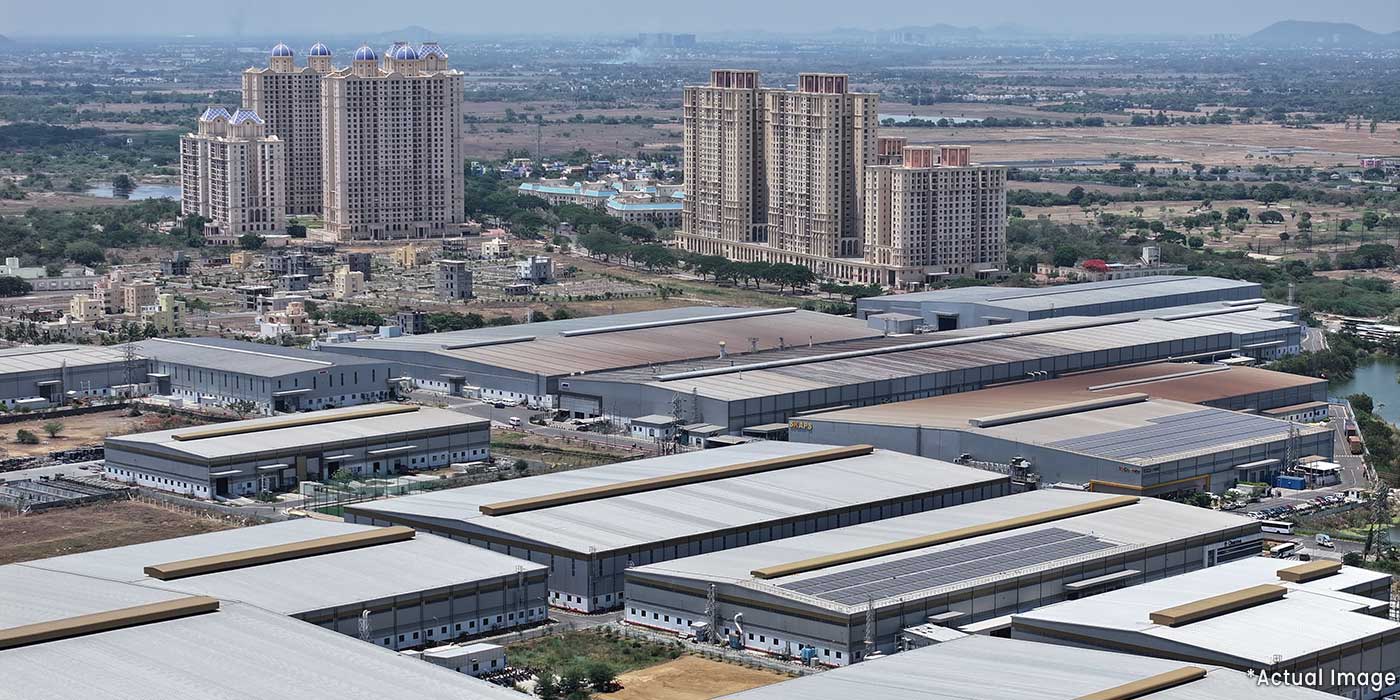
SIPCOT's Oragadam ecosystem already spans thousands of acres and includes automobile, electronics and specialised industrial infrastructure.
Add fresh corporate investment.
Daimler India Commercial Vehicles announced a proposed additional ₹4,000 crore investment in 2026 around its Oragadam operations, including manufacturing, R&D and localisation.
Add industrial diversification.
The Medical Devices Park introduces life sciences and specialised manufacturing. AeroHub brings engineering, aerospace and defence-related workspace into the wider Sriperumbudur ecosystem. Electronics continues to deepen across the corridor.
Add logistics.
Major private developers are expanding Grade-A industrial and warehousing capacity around Oragadam, signalling continued occupier demand.
Then add road infrastructure.
The Chennai Peripheral Ring Road is designed to improve economic connectivity across the metropolitan periphery and connect major transport corridors more efficiently.
What happens when all these pieces interact?
More businesses create more employment.
More employment creates more residential demand.
More residents make schools and healthcare viable.
A larger population attracts restaurants and retail.
Senior executives create demand for hotels and premium housing.
Industrial companies create demand for offices and business services.
Better social infrastructure makes the location more attractive to talent.
Better talent availability attracts more businesses.
The cycle begins feeding itself.
This is how an industrial corridor becomes a complete urban economy.
There is no guarantee that every element will arrive at the same speed. Infrastructure projects can face delays. Housing demand may develop unevenly. Certain industries will expand faster than others.
But the structural direction is difficult to ignore.
Oragadam already has something many aspiring residential locations spend decades trying to create: a genuine employment engine.
That is its greatest advantage.
The task for the next phase is to build the human city around it.
Better housing.
Better education.
Stronger healthcare.
More recreation.
More retail.
More hospitality.
More public and private infrastructure.
If that happens, by 2030 the question around Oragadam may have changed completely.
Instead of asking:
"Why would somebody live near an industrial corridor?"
Chennai may be asking:
"Why would somebody working in one of India's most advanced employment corridors choose to live anywhere else?"
That is the transformation worth watching.
Oragadam's first chapter was about industrialisation.
Its second could be about urbanisation.
And that story may only just be beginning.