




The Arrival of Aerohub Signals Something New for Sriperumbudur-Oragadam.
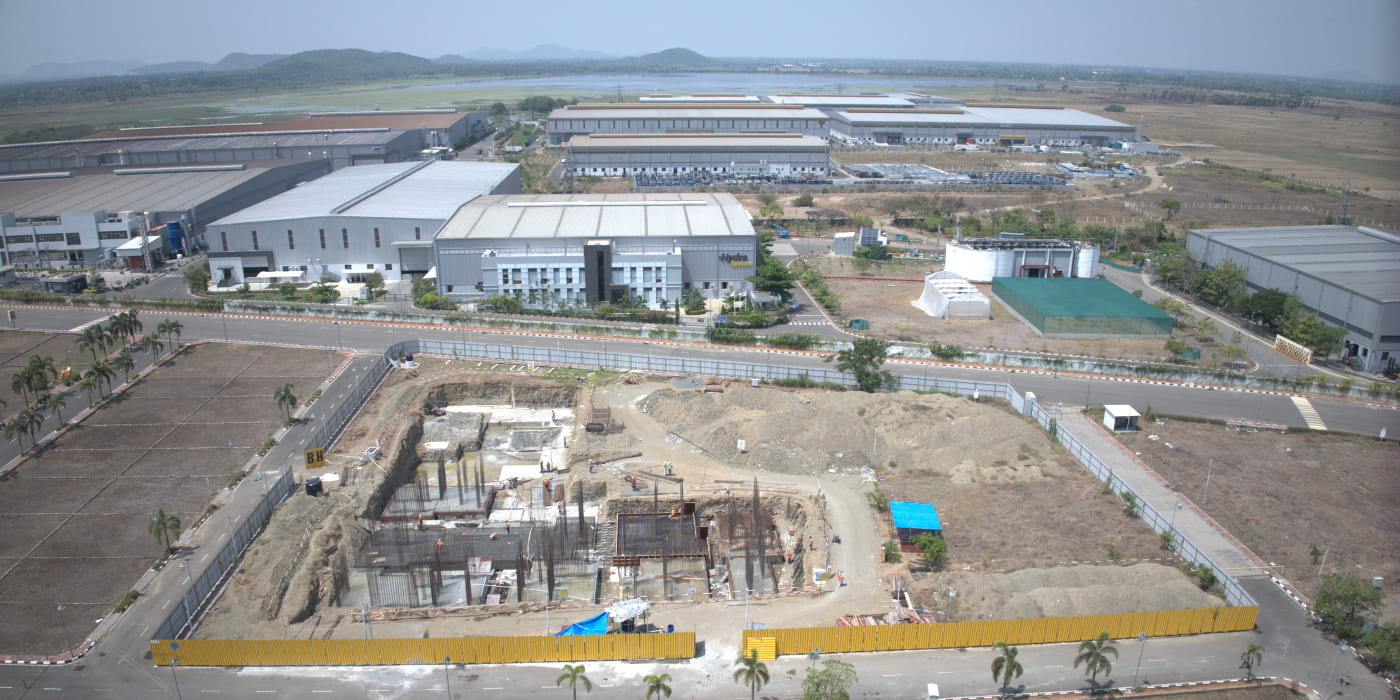
Industrial corridors traditionally have two kinds of buildings.
Factories and warehouses.
The arrival of more sophisticated office, engineering and technology infrastructure changes that equation.
AeroHub at Vallam Vadagal near Sriperumbudur is therefore worth watching.
Developed through TIDCO and TIDEL Park, the facility was inaugurated in 2026 and comprises approximately 3.04 lakh sq. ft. across eight floors. TIDCO is offering flexible spaces of roughly 9,000 to 20,000 sq. ft. and positioning the facility for businesses ranging from startups and MSMEs to multinational enterprises.
More interesting than its size is its intended purpose.
The project is designed to support activities including engineering design, avionics manufacturing, advanced prototyping, repair capabilities and defence technology.
That represents a subtle but significant shift for the wider industrial corridor.
Manufacturing locations historically separated the "factory" from the "office".
Corporate teams remained in Chennai.
Production teams travelled outward.
Engineering and design functions were often dispersed.
But advanced manufacturing increasingly blurs these boundaries.
Product development needs to sit closer to production.
Automation teams interact constantly with factory operations.
R&D benefits from proximity to testing.
Supply-chain specialists need direct access to vendors.
Aerospace and defence programmes require engineering, validation and manufacturing to interact closely.
This creates demand for white-collar workspaces within industrial ecosystems themselves.
If that trend strengthens, it could have an important residential consequence.
An engineer working primarily inside an air-conditioned R&D or design office has the same lifestyle expectations as a professional working in an IT corridor.
So does a finance manager.
A programme director.
A consultant.
A senior procurement executive.
A multinational company's plant leadership team.
If increasingly sophisticated professional employment is concentrated in Sriperumbudur and Oragadam, the case for higher-quality housing nearby becomes stronger.
The location then begins competing not merely for investment, but for talent.
And attracting talent requires much more than factories.
It requires good homes.
Good schools.
Good restaurants.
Healthcare.
Fitness.
Social spaces.
Convenient daily living.
This may be the larger significance of AeroHub.
One building will not transform a corridor.
But it points towards a different economic future.
A future in which Oragadam and Sriperumbudur are not simply places where Chennai manufactures.
They become places where Chennai designs, researches, engineers and innovates as well.
That is the kind of economy around which a substantial new residential market can develop.